Contact us
Compagnie abg conseils juridiques accompanies you in all your legal issues. Contact us for a consultation.
In Quebec, divided co-ownership is a property regime governed by articles 1038 to 1109 of the Civil Code of Québec (CCQ). This legal framework establishes the rights and obligations of co-owners as well as the functioning of the syndicate of co-ownership. To better understand your rights and the remedies available, consult the official legislation on the Civil Code of Québec and the legal resources available from organizations such as Éducaloi.
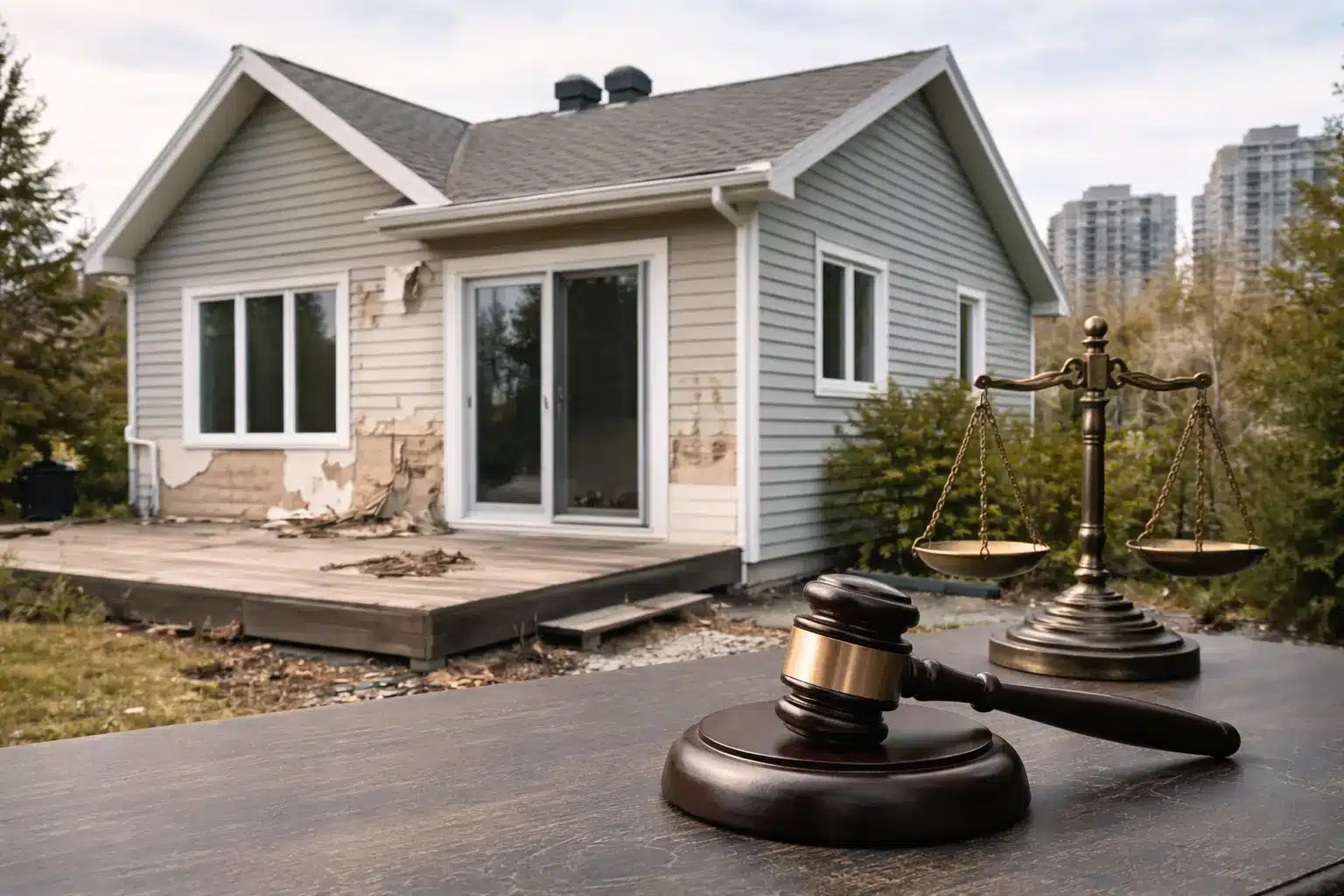
Condominium disputes can arise at any time and generate considerable tension between residents. Whether it’s a matter of disputed common expenses, poorly executed work or breach of agreement, it’s crucial to know your rights. Civil litigation services offered by a competent law firm can help you navigate these complex situations.
Conflicts between co-owners vary, but certain themes come up regularly:
| Type of dispute | Party involved | Hand remedied |
|---|---|---|
| Unpaid | chargesSyndicate vs co-owner | Action for payment, legal hypothec |
| Restoration | workSyndicate, owners, contractor | Action for revision of estimates, arbitration |
| Nuisances and violations | Co-owners among themselves | Formal notice, injunction |
| Contested | assembliesCo-owners vs. syndicate | Action for nullity of resolution |
| Latent defects/construction | Buyer vs. Seller/Builder | Warranty action, recourse action |
| Incomplete | disclosureBuyer vs. Seller/Agency | Cancellation of sale, damages |
The syndicate of co-ownership is a legal person responsible for administering the building and defending the collective interests. According to sections 1038-1109 of the CCQ, the union must:
The union’s board of directors plays a central role in conflict prevention and resolution. However, when internal discussions fail, the intervention of a civil law firm often becomes necessary to protect your rights.
Faced with a co-ownership dispute, several avenues are available to you:
| Recourse | Duration approx. | Cost | Benefits |
|---|---|---|---|
| Formal notice | 1-3 weeks | Low | Fast, can resolve conflict |
| Mediation | 1-3 months | Medium | Maintains relationships, flexible |
| Arbitration | 3-6 months | Medium-High | Faster than court, confidential |
| Trial (civil action) | 1-3 years | High | Formal decision, possible appeals |
Condominium disputes are particularly common in areas with a high density of condos. The ABG&CJ Lawyers team represents co-owners and syndicates in litigation in Montreal, Longueuil, Brossard, Laval and on the North Shore.
To better understand your rights, also consult our guides on neighbourhood disturbances under article 976 C.C.Q., formal notice in Quebec, and the professional liability of experts.
You have the right to request a review at a general meeting, to contact the Régie du bâtiment du Québec (RBQ) in the event of major defects, or to consult a lawyer to find out about your specific recourses. A formal formal notice can also force the syndicate to act quickly.
You can bring an action for nullity of resolution if you demonstrate that it contravenes the declaration of co-ownership, the law or that it was adopted irregularly. This action must generally be filed within 12 months of the meeting. A lawyer can assess the strength of your challenge.
The syndicate can take action for recovery, place a legal hypothec on the lot of this co-owner, or proceed with a seizure. Other residents may also be affected by this failure since the syndicate must balance its budget. The intervention of a legal professional often speeds up the collection process.
Latent defects and construction defects are part of co-ownership disputes when they affect the common areas or the overall structure. In this case, the syndicate can take action against the builder or the seller. For defects affecting your personal unit, you may have independent remedies. Consult our construction litigation department for specific cases.
The duration varies considerably depending on the remedy chosen. A formal notice can resolve the conflict in a few weeks, a mediation in a few months, while a trial can last several years. Opting for an out-of-court remedy can significantly speed up the settlement.
Co-ownership disputes in Quebec are complex and require a solid understanding of the legal framework. By knowing your rights, the remedies available and acting quickly, you can protect your interests. For professional assistance adapted to your situation, do not hesitate to consult our civil law firm in Montreal.
Compagnie abg conseils juridiques accompanies you in all your legal issues. Contact us for a consultation.